Categories
Manga Blogging UNSHELVED

Yumi Tamura Manga Moveable Feast

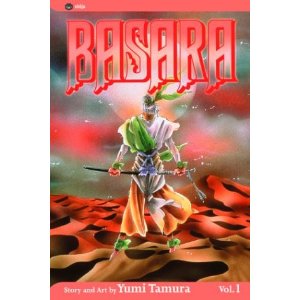
I am very excited about the Yumi Tamura Manga Moveable Feast happening this week! Basara is one of my favorite manga, and I would love to see more work by Tamura translated into English. I’m planning on getting back on my Basara reread campaign that I let lapse previously, but I thought I would do a mini-roundup of some of my previous posts that covered some of her works.

Chicago – complete with cello technique critique!
Basara 1 and 2
Basara 3 and 4
Basara 5 and 6
Basara 7 and 8
Basara 9 and 10
Basara 11 and 12

I feel like I’m going to spend a portion of this week vainly wishing that someone would license Tamura’s 7 Seeds for English publication, but I will also put my slightly mournful feelings aside and dive back into Basara, which is always a rewarding reading experience.

Categories
Manga Reviews REVIEWS

Kare First Love Vols 1-6

Kare First Love Volumes 1-3 by Kaho Miyasaka

I was excited to see the first volume of Kare First Love pop up on Viz Digital. I thought this would be a good excuse for me to reread the series. I checked out most of Kare First Love from a library a long time ago, and since then I’ve been slowly acquiring my own copies. Kare First Love was a shoujo manga released before the Shojo Beat imprint came into being. In terms of content, it would skew a bit older than some of the titles in the Shojo Beat line, although Miyasaka doesn’t straddle the josei/shoujo line the way I feel Ai Yazawa sometimes does.

Kare First Love sticks fairly close to standard shoujo plots, but it executes them in an engaging and sometimes slightly more realistic way. Kare First Love also piles on the drama. While there are humorous moments, there’s much more angst as the protagonists navigate their budding relationship. Karin Karino is a shy girl who hides behind her glasses and doesn’t stick up for herself at school. She’s thinking slightly snarky thoughts to herself as she endures her morning bus ride when she’s approached by Kiriya, a handsome student from a nearby boys’ school who is interested in the photography book that she’s reading. A mishap on the bus leaves Karin thinking Kiriya is a pervert, and she slaps him and leaves her book behind. Like many shoujo heroines Karin’s outward actions contract with her inner thoughts, as she meekly gives in when her frenemy Yuka demands her class notes while thinking of what she’d actually like to say in response. All the mean girl shenanigans are deflated a little bit by Nanri, a girl in Karin’s class with a worldly and cynical air about her. Nanri holds herself apart from the rest of the class, but she points out to Karin that she does have the ability to stop being taken advantage of if she would only speak up.

As much as Karin would like to go back to her simple anonymous life Kiriya will not go away. He shows up at her school to return her photography book, and they immediately start bickering. Yuko decides that she’s going to use Kiriya’s odd interest in Karin to pursue him and his group of hot friends. Karin finds herself maneuvered into a series of awkward group dates, and it becomes apparent that instead of being obnoxious, Kiriya is almost saintly for a 16-year-old boy. He goes out of his way to look after Karin, maneuvering her through awkward social situations. Karin can’t believe that Kiriya is actually interested in her, but around him she actually says what’s on her mind without her customary filter of shyness.

As Karin and Kiriya start to spend more time with each other, she learns that he’s estranged from his family and supports himself by working a series of part-time jobs. His main ambition is to be a photographer. There are plenty of misunderstandings and incidents where Karin is swept off her feet while Kiriya says things like “Let me take care of you…or I’ll do something horrible like kiss you again.” Kiriya encourages Karin to rediscover her love for music, which is something that she dropped due to the extreme pressure her parents placed on her studying for school.

One of the things that sets Kare First Love apart from other shoujo manga is the way Miyasaka details the trials and tribulations associated with Karin and Kirya developing the physical aspect of their relationship. The manga goes into more detail than is typical, with Nanri sometimes functioning as a peer counselor for the Japanese equivalent for Planned Parenthood because she keeps handing Karin condoms to ensure that when she does have sex, it will be safe sex. Karin is as scared and timid as you would expect a socially isolated girl to be, and Kiriya is about as patient as one would expect a 16 year old boy to be, which is not very patient. One difficult element of the characterization that Miyasaka manages to pull off is that for several volumes Kiriya is basically pressuring Karin to have sex, but he doesn’t seem like a jerk. He might attempt more physical intimacy in their relationship, but he always backs down when Karin appears uncomfortable.

Teenage romance is always both intense and complicated, and in short order the couple have to deal with Kiriya’s tragic past (the most important accessory of any shoujo hero), Karin’s overbearing parents, Yuka’s bullying, interfering photographers, and Kiriya’s attractive older sister-in-law. In addition to these outside complications, Kiriya and Karin’s relationship turns stormy due to their own lack of communication and misunderstandings with each other. The dynamic of the main relationship in Kare First Love reminded me a bit of Fuyumi Soryo’s Mars, but with much less psychological torture.

Miyasaka’s art is attractive, but most fluid and natural when she’s drawing teenagers. Karin’s father often looks a tad on the robotic side, but that could also be a function of his less than great personality. Karin is believable as a stunning shoujo heroine when she takes off her glasses, and Kiriya’s larger frame and shaggy blond hair contrasts with her more conservative look. Miyasaka does a good job alternating between the outward action and Karin’s thoughts, making all the scenes of breaking up and making up dramatic enough to satisfy any shoujo fan.

I’m very happy that Viz is making their backlist available on digital platforms, and I hope this series finds a new group of fans!

Categories
Manga Reviews REVIEWS

Dengeki Daisy, Vol. 12


Dengeki Daisy Volume 12 by Kyousuke Motomi

It occurred to me as I was reading volume 12 of Dengeki Daisy that more shoujo titles should feature yacht kidnappings as standard plot points. Think about it! Instead of evil male models, frenemies, and surprise fiances, there would be random kidnappings taking place on luxurious ships! Wouldn’t it lend a bit of excitement and suspense to most manga?

I enjoy Dengeki Daisy so much because it portrays a slightly unconventional romance with some elements of techno thriller action. As you might guess, volume 12 features a yacht kidnapping, as Teru and her hacker/school janitor/almost boyfriend Kurosaki team up with the rest of the Scooby Gang to rescue Rena from her evil fiance Morizono. They storm the party in a variety of disguises. Kurosaki pretends to be a clueless foreigner. Teru gets all dolled up and stages an elaborate and hilarious distraction by pretending to be Morizono’s spurned lover. Hasegawa disguises himself as a waiter. As the group secures Rena, Kurosaki stumbles across yet another hacking conspiracy. Akira’s presence is almost negligible, as Kurosaki works to foil the plan to sell the Jack Frost virus and encounters someone else from his past – a person who started the tragic actions that lead to the creation of the Jack Frost virus in the first place and the death of Teru’s brother.

Dengeki Daisy always manages to cover a wide variety of emotional scenes in an effortless way. There’s the fun caper of the team storming the yacht where Rena is held captive, followed by a celebration afterwards where Rena and Hasegawa start inching towards the development of a new relationship. Nothing is ever simply happy in Dengeki Daisy for long though, as Kurosaki is horribly affected with his encounter with the mysterious new hacker. Kurosaki is in many ways the exact opposite of the cool shoujo hero, and the level of vulnerability he displays to Teru shows the reader just how traumatized he is as well as how much he trusts her. They’re one of my favorite shoujo manga couples of all time, and each volume of the series tends to show a new aspect of their relationship. Even though each conspiracy tends to lead to yet another conspiracy and I am wondering why every hacker that shows up in this manga has long bangs, after twelve volumes of Dengeki Daisy I’m still looking forward to seeing what happens next.

Categories
Manga Reviews REVIEWS

Strobe Edge, Vol. 4

Strobe Edge, Vol. 4 by Io Sakisaka

One nice thing about new series with several volumes waiting in the wings to be translated is being able to read the English volumes with only a few months between releases. It is easier to appreciate the changes in plotting and art that appear over time as the creator gets more and more comfortable with a series. I wouldn’t have predicted after I put down the first volume of Strobe Edge that I would be enjoying it as much as I am now. There’s much more subtly shown in the relationships between the characters and even when stereotypical shoujo plot devices pop up, I find myself not minding them at all just because of the great work Sakisaka has done with her character development.

Heroine Ninako was bordering on being annoyingly naive in the first volume, and while she’s still relentlessly innocent she is in tune with her own emotions and is able to sense when a situation might be wrong for her. When reformed womanizer Ando starts pressuring her to date him, saying she can use him to forget her feelings for Ren, Ninako replies “Your idea of love and my idea of love aren’t the same at all. And I could never use you to forget him! You know how much it hurts to love someone…who loves someone else.” Ando tells Ninako that she doesn’t have to answer right away and goes back to his usual light-hearted personality but she can tell that he’s putting on an act to make her feel at ease.

Ninako and Ren keep getting pushed together in various situations, and while he tends to keep a tight reign on his expressions it is easy for the reader to tell that he’s filled with turmoil. Ren’s determination to be a “nice guy” is resulting in his continuing a relationship with his high-strung girlfriend, even though he and Ninako seem to share a unique bond of understanding. Ninako and Ren’s non-relationship is contrasted with the more established supporting couple of Daiki and Sayuri, who deal with their problems and end up becoming stronger together. There’s a slowly building tension in this series, as Ren keeps struggling to do what he thinks of as the right thing even while it becomes more and more intolerable.

Sakisaka does a good job showing her characters’ reactions to the emotional scenes, as she contrasts facial expressions or shows Ren turning away in order not to display his emotions. I’m looking forward to the next few volumes, as I can sense some dramatic crying scenes and confrontations coming up when Mayuka starts to realize that Ren is only showing her one carefully crafted side of his personality.

Categories
Manga Reviews REVIEWS

Pepita by Takehiko Inoue

Pepita: Takehiko Inoue Meets Gaudi

This has been a very good year for fancy hardcover editions of manga materials. There’s Gundam: The Origin, Wandering Son is still coming out, Heart of Thomas, and the Nausicaa box set was great. This book, about Takehiko Inoue’s architectural tour of Spain and specifically Gaudi works isn’t filled with enough drawings to be an art book, and it doesn’t have enough biographical or written content about Gaudi to be a true study of the man. Instead, we get an interesting travel sketchbook that reveals as much about Inoue’s artistic process as it does about the subject he’s exploring.

I started reading this without much knowledge of Gaudi other than the fact that he was an architect who explored form in an innovative manner. Inoue travels to Spain to get a sense of the man and his approach to designing with nature. Inoue’s reflections come in the form of written thoughts and some exuberant drawings, as he comes up with his own interpretations of Gaudi’s trademark mosaic salamander. Throughout the book we get impressions of Gaudi’s life and some of his most significant work. Inoue’s illustrations are sometimes superimposed on photos, which creates an interesting effect. Inoue’s questions and struggle to understand Gaudi show the reader a great deal about Inoue’s artistic process and artistic approach. There’s enough information about Gaudi in the book that I felt I came away from it slightly better informed, but I thought I’d have to do even more study to really grasp the topic.

In the end, this hybrid art book gives the reader a feeling as if they’ve just spent a little bit of time on an architectural tour of Spain with Takehiko Inoue as their tour guide. This is a pretty good feeling to have! Serious students of architecture might not find the book very informative, but to a casual reader with an interest in Gaudi, this book is worth checking out. I always think that any book by Inoue is worth reading, and I did enjoy this very much.