Categories
Manga Reviews

Tegami Bachi: Letter Bee Volumes 6 and 7

I’d read the first couple volumes of this series and enjoyed the unique world building in this story about a young boy who wants to be a letter carrier in a world lit only by an artificial sun. The standard shonen quest storyline is fairly typical, but the art and settings are detailed and unique.

Tegami Bachi Volume 6 by Hiroyuki Asada

The sixth volume opens as Lag delivers a letter to a sick but rich young woman named Rei. She keeps getting anonymous notes that are lovely reminders of her hometown. Her new maid Kimidori is the source of the notes that bring her mistress comfort but the head servant takes credit for her work, bullying Kimidori into silence. Lag has to reveal Kimidori’s good works without breaking a promise he made to her to keep her secret. This story is focused on botanical images and nostalgia, as Kimidori uses flowers to produce a dye that evokes Rei’s favorite color. The second story delves into the psychology of loss, as in an abrupt shift Lag is working at a lighthouse with an elderly man he calls “Grandpa.” Lag’s identity seems to be completely forgotten in his new life, but he’s haunted by a shadowy monster at night and wonders if he’s losing his mind. It turns out that the loneliness of the old man has persisted after death, feeding one of the giant desert bugs that preys on emotions. Letter Bee Jiggy Pepper and Lag’s sidekick/dingo Niche come to the rescue.

Lag’s ongoing quest is to find the Letter Bee that inspired him to take up the job – Gauche Suede. Gauche has disappeared and is rumored to have become an evil marauder. Lag visits Gauche’s sister Sylvette to see if she can help him construct a letter that will bring Gauche back. Sylvette has some pretty dynamic action sequences as she fights from her wheelchair. The art in Tegami Bachi is one of the things that makes this series more enjoyable than most shonen series. The stark contrast of black and white is used in most of the illustrations, with sparing use of shades of grey. The contrast serves to emphasize that the characters are living in a fantastic world with artificial illumination. The barren desert that Lag journeys through is suitably menacing, as are the character designs of the monsters he encounters.

Tegami Bachi Volume 7 by Hiroyuki Asada

Most of the volumes of Tegami Bachi I’ve read focus on short stories centered around Lag and the people he meets briefly when he travels. Volume 7 really seems to propel the plot forward as well as give some back story about Niche, Lag’s tiny yet fierce companion. Lag and Niche are nearing the area where she was born and she abruptly announces that she was born 200 years ago, and it would be better if she didn’t attract any attention from the villagers. It turns out that the villagers had a symbiotic relationship with a powerful creature called the Maka, who serves as an elemental sort of protection against the giant killer insects that ravage Lag’s world. As with most cases when human encounter forces of nature that they don’t understand, the twin daughters of the Maka were abused and abandoned. Niche meets her sister, who appears in a much more mature form than Niche manifests. Niche’s sister is horrified that Niche is serving as a sidekick to a member of the human race, but is Lag still exactly human?

Some of the fight scenes in this volume were terrific. The hair blades that Niche uses for weapons become giant weapon constructs when used by her older sister. Gauche as the marauder Noir now seems to be targeting his old colleagues by stealing the mail. Lag’s role in shoring up people’s spirits through letter delivery may be much more important than he ever imagined. Overall, these were two very strong volumes, and I was happy for the chance to revisit this unique shonen series.

Review copies provided by the publisher

Categories
Manga Reviews

Library Wars Volume 6

Library Wars is a predictable yet cozy series. There’s no doubt that Iku and Dojo are going to wind up together, and the plot does meander around their relationship with some cursory treatment of intellectual freedom and censorship issues. What I’ve really liked about the past two volumes is that instead of setting up predictable and artificial plot devices to keep the hero and heroine apart (Sudden Fiance! Artificial Misunderstanding! Evil Male Model!) the focus is on some of the secondary characters, giving us a chance to get to know the other characters better. The last volume focused on Komaki and this volume highlights Iku’s roommate Shibazaki.

Shibazaki has always been an interesting foil for Iku. She’s incredibly intelligent and self-possessed, which serves as a contrast to Iku’s impulsive and emotional behavior. Hikaru Asahina, a library patron, abruptly asks Shibazaki out and she agrees to see him after being pushed into the situation by a co-worker who is worried that her own crush is nursing some feelings for Shibazaki as well. Shibazaki thinks Asahina is a nice young man, but she becomes more interested when he mentions that he’s involved in studying issues centered around book burning. Asahina manages to crack through Shibazaki’s well-rehearsed facade. Some of his qualities remind Shibazaki a little bit of Iku, and we learn why she has a tendency to become attached to people who conduct their lives without pretense. Shibazaki was targeted by a bunch of mean girls in junior high, so in high school she dedicated herself to becoming popular with a cool and intellectual approach that resembled the practices of an undercover agent. Shibazaki’s personality traits of teasing reserve and constant deflection suddenly make a lot of sense!

Sibazaki’s slow approach to making another genuine friend is set against another storyline where everyone else in the library forces deals with a censorship issue. I thought this was a strong volume of Library Wars. The Shibazaki storyline was fresh and interesting, but there was plenty of Iku and Dojo action when they were dealing with the latest crisis of the week. I’m looking forward to the next volume.

Categories
Manga Reviews

Detroit Metal City Volume 10

The final volume! I’ve missed a couple volumes leading up to the grand conclusion of Detroit Metal City, but since most volumes of DMC are fairly similar it was easy to get into the story. DMC is broken up, and there’s a new metal king in town, “Lord God.” Lord God is a wannabe male model who has taken to death metal instead, turning his catwalk posing into a stage move called the “God Walk.” Negishi has run off to Paris to indulge his dream of producing syrupy sweet romantic music, but it seems like the French hate his true self. He is resolutely ignored whenever he plays his music on the streets of Paris to the point where when he gets hit in the face with a raw egg, he responds with thanks for getting some sort of reaction from someone. The remaining members of DMC want to put on one final show, but will Negishi come back from Paris in time?

Of course, there is never any doubt that Lord Krauser will make a final appearance in the last volume of DMC and he makes his entrance in grand style, after sending along video of him systematically violating every single symbol of Paris he can find. Krauser and Lord God have an epic showdown, and Negishi’s attempt to show his other side to his love Aikawa goes just as well as one might expect. My main problem with Detroit Metal City is that it was never as funny and shocking as the first volume. Once the reader knows the set-up, the subsequent volumes were all very similar. Still, I’m glad that a series this gleefully profane was brought over here. I will certainly never be able to think the same way about the national monuments of many countries, after seeing what Lord Krauser did to them.

Review copy provided by the publisher.

Categories
Manga Reviews

Harlequin Manga: Acting on Impulse and Vengeful Seduction

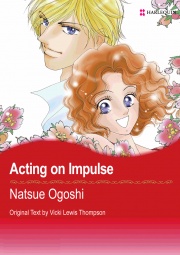
Acting on Impulse by Natsue Ogoshi and Vicki Lewis Thompson
Available on emanga.com

I always enjoy Harlequin manga when they exhibit a strong sense of humor. Acting on Impulse is plenty funny as it details the adventures of a naive farmgirl who moves to New York City, determined to live a “metropolitan” lifestyle. Unfortunately Trudy’s expectations of New York are entirely drawn from popular entertainment, which results in occasional hilarity. Trudy’s landed a job as a lowly office worker at a PR firm. She’s friends with a couple in the city who decide that her arrival is a perfect opportunity to fix her up with confirmed bachelor Linc. They ask Linc to be Trudy’s tour guide and look out for her as she gets adjusted to life in the big city. When Trudy meets Linc she pronounces him almost as handsome as her favorite actor and asks him to intone the lines “Admit you want me. I’ll give you ecstasy like you’ve never had before.” They promptly enter into a relationship where they are dating but proclaiming that they aren’t dating, because she wants to experience the freedom of the city and he is afraid of commitment. Trudy’s excess of enthusiasm and bizarre expectations of city life give her more personality than I’ve come to expect from a Harlequin heroine. The art is a little rushed at times, but the characters are attractive and the funny dialog goes a long way to make Acting on Impulse fun to read.

Vengeful Seduction by Cathy Williams and Yukako Midori
Available on emanga.com

Vengeful Seduction is the story of a woman forced to betray her true love when an evil man blackmails her into marriage, only to be dramatically confronted by her past when her drunk husband kills himself and her father in a car accident. Shortly after dealing with her father and horrible husband’s deaths, Isobel is confronted with her ex-boyfriend Lorenzo. Now a successful businessman, he appears again in her life to buy and turn around her family’s failing business. He intends to get Isobel back too, but she’s determined not to be treated like a possession again. As Isobel and Lorenzo are forced to spend more time together, details about her evil husband and her father’s potentially shady business dealings emerge. This harlequin manga had a general feeling of doom and sadness, without the touches of humor that I tend to enjoy. If I’m reading something silly I’d rather have something to laugh about, as opposed to a story that while somewhat goofy takes itself too seriously. So, I am not a fan of Vengeful Seduction, but Acting on Impulse was fun enough to make up for it.

Online access provided by the publisher.

Categories
Manga Reviews

Skip Beat 25 and Seiho Boys' High School 8

Skip Beat Volume 25 by Yoshiki Nakamura

Skip Beat is so great. For all the gangly limbs and oddly proportioned characters that Nakamura draws she is an absolute master at nuanced facial expressions, as evidenced in a series of confrontational scenes in this volume of Skip Beat!. I was happy to see some events happen to propel the slowly developing relationship between Ren and Kyoko forward at last. Sho, the evil pop idol and former target of Kyoko’s obsession and revenge shows up with an elaborate bouquet and engineers a dramatic kiss right in front of Ren and some of Kyoko’s co-workers. Since Sho is a spoiled brat who can’t abide not being the focus of Kyoko’s attention, he has decided to steal her first kiss and act obnoxious in the hopes that she’ll start thinking about him again. Ren goes from amazed, to annoyed, to dangerously furious as he watches this scene play out. Kyoko is left in hysterics about not getting her first kiss back and Ren chooses to deal with the situation in the best way possible; he appeals to her professionalism. When he notices her unglued he points out that it isn’t anything to get wrapped up over and that “What feels like your first kiss counts as your real first kiss.” He can’t maintain his impartial facade for long and warns her that he doesn’t want to see a repeat of the situation and Kyoko’s response is “I shall risk my life to preserve my purity!”

Kyoko and Ren dance around their emotions, not willing to admit anything to each other yet. Ren’s reactions and the way he behaves towards Kyoko are carefully calculated, not because he’s manipulative but because he doesn’t want to cause her any more emotional damage. His measured approach and awareness of her emotional fragility stands in stark contrast to Sho, whose innate selfishness ensures that he’s never going to be a good match for her. Kyoko has Ren on such a high pedestal, that she isn’t capable of entertaining the thought that he has feelings for her. It is a rare series that manages to rack up so many volumes and still keep me entertained when the romantic protagonists have barely kissed, but Skip Beat always manages to be both fun and interesting in the way the relationships between the characters continue to play out.

Seiho Boys’ High School Volume 8 by Kaneyoshi Izumi

This was a not-so-guilty-pleasure series for me, because it was much better than I expected a shoujo manga set in an all boys high school to be. The romantic issues of the main characters get a certain amount of resolution in this final volume, but the well worn plot device of misunderstandings serving to drive some of the couples apart makes me glad that the series stopped when it did. Maki is hearing that his girlfriend Takano has been hanging out with school heartthrob Kamiki. At first he resolutely denies the possibility, but then runs into Takano and Kamiki on the beach. Kamiki and Takano are only talking. She’s going through some changes in her life that she’s hiding from Maki and Kamiki warns her “Once you figure out that I can’t make you less lonely, talk to Maki.” Maki sees them together and abruptly breaks up, but Takano was hiding the fact that she’s headed overseas from him. Maki and Takano manage to get a little bit of resolution, but Kamiki is left to deal with his own problems.

Kamiki’s white knight tendencies are coming in the way of him actually getting to develop a real relationship with Miaji. She calls him out on this personality trait, saying “I don’t want your pity, I want your love.” She rejects his help and enters into a stressful project – taking care of a stray dog with Maki. Kamiki ends up helping anyway, saying “I wanted an excuse to talk to you, Miaji. Pretty sneaky of me, huh?” The series ends with the general sense that the main characters are all going to be ok. Having a shoujo series with a more male centric point of view was refreshing, and Izumi’s art has an element of clarity that ensures it is easy to read. The one thing that threw off my enjoyment of this manga was the back-up story called “Reverse Guilt” that has an extremely icky twist ending that contrasted with the more peaceful conclusions of the main story.

Review copies provided by the publisher.