Categories
Manga Reviews

Dengeki Daisy Volume 7

Dengeki Daisy Volume 7 by Kyousuke Motomi

The cover design of this volume perfectly represents the odd combination of plot lines that end up getting featured in Dengeki Daisy. Kurosaki is tenderly kissing a tearful Teru’s hand on the front cover, and the back cover features the deranged Akira with a maniacal grin and a creepy red eye. The warm and fluffy part of this volume occurs when Teru and Kurosaki A mysterious man keeps popping up near Teru and she and Kurosaki gradually realize that it is the elusive and dangerous attacker Akira.

The first part of the book shows Teru and Kurosaki fighting off a manageable foe – one of the teachers at the school has decided that Kurosaki is a bad influence on Teru and is determined to separate them. Teru vows to prove that her grades won’t suffer because of the time she spends helping out with janitorial tasks and makes an impulsive bet involving her class standings and Kurosaki’s hair, only to abruptly fall ill the night before the exam. A boy Teru saw at the bus stop and was curious about because he reminded her of her brother abruptly kisses her, and she’s devastated. Kurosaki as Daisy sends her an emotional text, then quickly backs away. It is fairly typical of the dance that these characters do, as they grow closer but still maintain the polite fiction that separates them. The kissing bandit is of course Akira, and he engineers a situation that results in Teru learning a new piece in the puzzle about her brother’s death.

Despite the fact that the central mystery behind Teru’s brother hasn’t been fully explained and the series is now up to volume seven, I’m still interested in seeing what happens next in this manga. The relationship between Teru and Kurosaki is one of the more original pairings in shoujo manga, and despite the gulf in their ages and personalities I can’t help but hope they get together in the end. I’m perfectly happy reading an almost indefinite number of volumes before that ending appears.

Review copy provided by the publisher

Categories
Manga Reviews

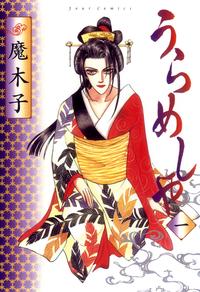
Urameshiya Volume 1

Urameshiya Volume 1 by Makiko

Available online at Jmanga.com

I was hoping to cover more scary manga for the month of October and the horror themed Manga Moveable feast, but life got in the way and the only new spooky title I’ve managed to read recently is Urameshiya from jmanga.com. This is a historical variation on what I tend to call “spooky shop” manga, where a person with spiritual powers has to intervene in the lives of people who are affected by ghosts. It is a snowy night in Edo era Japan, and an attractive woman named Oyou has used up her welcome and the sake supply at a local tavern. The owner apologies and says that he has to ask her not to come anymore because she’s scaring the other guests. She leaves with the advice that he should throw some salt at the ghost that is standing in a corner and heads out into the night. A handsome man who turns out to be a not overly bright pickpocket stumbles against her. She catches him in the act and tells him that he has to buy her sake to make it up to her. Saji decides that he’ll put a different spin on things by taking her to his house and getting her drunk.

As they travel they cross a bridge with a lonely female ghost. Oyou prevents Saji from getting trapped and they end up spending the night together, but one of Saji’s neighbors turns up frozen to death after listening to the spirit. Saji asks Oyou for help getting back at the ghost that killed his friend. What follows are three long episodes where Oyou and Saji form an incongruous ghost-busting team. Oyou is mysterious and a bit snarky, never confirming her feelings for Saji. In contrast, he’s quietly smitten. He decides to move in with her into the spooky tenement that seems to be inhabited only by freaks of nature. They deal with a case of wronged love, a rapacious rich girl cursed with vagina dentata, and have an unfortunate run-in with a young fox spirit. I really enjoyed the art style in Urameshiya, which is old fashioned and stylized in a way that highlights the historical setting. Oyou and Saji both have glossy black hair, long flowing robes, and angular faces with gigantic eyes. Saji provides Oyou with a bit of a grounding influence, tying her to the real world. For all that Oyou protests that she cares nothing for the young thief, she’s actually incredibly protective of him if he’s threatened. Having only three chapters in a single volume seemed to give the author the room to more thoroughly set the scene for each episode. I enjoyed the relationship between Oyou and Saji, the space given to each monster of the week, and the historical setting of Urameshiya. I’ll definitely be on the lookout for the next volume in this series.

Categories
Manga Reviews

Sherlock Holmes Volume 1

Sherlock Holmes Volume 1 by Toya Ataka
One volume available on Jmanga.com

This shonen mystery manga creates a breezy and fun mash-up of the Sherlock Holmes mysteries combined with fantasy fighting elements. I was pleasntly surprised by the Sherlock Holmes adventures in this manga, which were made more entertaining by a genuinely creepy mystery and an irreverent approach in portraying the classic characters of Holmes and Watson. Here, Watson is an alarmingly competent and somewhat sarcastic tall drink of water, who affects a checkered eye patch that goes well with the checkered accents on his vest. Holmes is a tiny teenage whiz kid with a mystical shadow power that provides him with heightened powers of perception. Poor Holmes is also unable to control his tendency to blush. The first case the duo is tasked to solve hooks the reader effectively. A popular actress dies after giving a performance, with her teeth mysteriously disappearing before she drops dead in front of her audience. There are no witnesses to the crime, and Watson and Holmes have to piece together what happened as they interview the actresses patron and stumble across a creepy piece of jewelry.

Part of the fun of this manga for me was seeing the roles of Holmes and Watson swapped so effectively. Watson is worldly and sarcastic, taking the lead on the cases but having Holmes use his mystical powers to aid in the investigation. While Holmes is young and inexperienced, he’s still powerful and doesn’t hang back from taking initiative. Holmes’ shadow powers are illustrated effectively as his eyes turn into photo negative images when he calls on his shadow. Having mystical fight scenes take the place of more cerebral detection is only to be expected in a shonen version of Sherlock Holmes, but I found the entire volume entertaining. I’ll be on the lookout for the second volume.

Categories
Manga Reviews

Cross Game Volume 4

Cross Game Volume 4 by Mitsuru Adachi

Picking up and reading Cross Game feels like a mini vacation sometimes. Adachi’s slow pacing and emphasis on everyday life creates a manga with a very natural tone and pacing, where events in the character’s lives pass by without artificial emotional drama. Ko starts working on his dream of getting to Koshien in earnest, as he starts playing regular high school baseball. Aoba’s handsome and athletic cousin Mizuki starts to attend Seishu Gakuen High School, sending most of the girls in the school into a tizzy until it is clear that the focus of his attention is Aoba. One of the ways Aoba and Ko are similar is the way they are somewhat oblivious to their own skills and attraction. Aoba goes on a date with Mizuki without being aware that there might be any romantic undercurrents, and Ko’s unassuming and hard working despite the fact that key people around him think he’s a baseball savant.

Ace hitter Azuma is so funny with his extremely narrow focus. He’s discussing a batter on a rival team and recalls his name, Keitaro Mishima, but he has absolutely no memory of one of his former teammates who has transferred schools. Mishima is forced to play down his full potential in order to not show up a senior player. Ko and Aoba continue their antagonistic relationship, but they also have moments of perfect understanding. When Aoba is standing alone on the pitcher’s mound Ko quietly walks towards home base and settles into catcher’s position, saying “You wanted to pitch, didn’t you?” When the Seishu Gakuen team plays against Sannou, they’ve been thoroughly scouted beforehand. The opposing team coach sees Ko’s inconsistent pitching and concludes that there isn’t much to his game while Aoba says while she’s watching in the stands “Guess he decided that he needed a little fielding practice.” The Seishu coach watches the game unfold with perfect equanimity, because while his team might have been scouted they are so new at playing together that they can’t help but be surprising.

One of my favorite moments in this volume of Cross Game happened towards the end of the volume, when Ko and Azuma are walking together discussing their upcoming game. Ko makes the pronouncement “I just have to pitch a game that Aoba won’t hell at me about.” Azuma’s typical poker face shifts infinitesimally and Ko asks “Was that a smile?” Azuma replies “Nope…I did not smile.” These little moments of character interaction set against the backgrounds of the playing fields and sky are what makes Cross Game so special. I’m still thoroughly gripped by this story.

Categories
Manga Reviews

Twin Spica Volumes 4-6

Twin Spica is one of those series that is so uniformly excellent I sometimes have a hard time writing about it because I really just want to say “Go read this!” But that wouldn’t make for a very long blog post, would it?

Twin Spica Volume 4

Asumi and her classmates start their first real day of astronaut training. They are submerged in water wearing space suits and forced to complete a simulation of the type of movements they’d be expected to do in space. Asumi notices that her left hand is too weak, and this triggers a wave of memories of her childhood with her companion Mr. Lion. He showed her how difficult fine maneuvers are in space by having her wear a puffy glove and pick up marbles. Asumi’s father comes home to see his tiny daughter sitting against a wall working on grip exercises with a resolute expression on her face. Her dad comments “Life’s tough, eh?” Asumi washes out of the exercise but she’s determined to improve. These first few scenes really highlight what I like best about Twin Spica. Asumi’s childhood memories blend and inform her desire to get into space, and even though she’s not in the optimal physical shape to be an astronaut, she won’t back down from her goals.

On a class outing Asumi encounters a boy who comments that the uniforms of Tokyo Space school make him sick. Asumi’s classmate Marika is hiding her own health issues, and Asumi’s friend Mr. Lion appears to have a strange connection with Marika way back when he was alive. One of the things I like about Twin Spica is that while the story unfolds with some potentially weighty symbolism, the slice of life tone keeps it from being too precious. Instead an interlude with Mr. Lion and the spirit of his father seems appropriately mysterious, and Asumi’s adventures in Zero G plane training end up forging a bonding experience with her classmates through vomit.

Twin Spica Volume 5

Asumi’s encounter with the space hating boy Kiriu continues to effect them both. They’ve run into each other a couple more times, and he’s saving a rocket key chain that she dropped. He’s bullied at school, and it turns out that he was affected by the same space tragedy of “The Lion” that overshadows Asumi’s life. Despite his initial defensiveness, Kiriu and Asumi end up bonding a little bit. Asumi heads out to a more serious test of her skill as the trainees are placed in capsules and dropped of at random points in the wilderness. This is to simulate what might happen in the event of a crash landing, and Asumi is all alone without anyone to support her. An extended flashback sequence brings up more questions about Marika and Mr. Lion, as he’s shown as a young boy befriending a sick girl who seems to be trapped in her house most of the time. The boy builds a giant rocket model clubhouse out in the woods near her house, and the girl sneaks away to join him. Mr. Lion thinks “I never knew her name…their faces look similar but the age difference is too great.” When he visits his old clubhouse he sees the names Marika and Mr. Lion etched into a metal panel. Asumi’s struggles in the woods contrast with the young Mr. Lion’s attempts to befriend a lonely and sick girl.

Twin Spica Volume 6

Every few volumes Twin Spica will make me feel all weepy. Asumi manages to work her way through the wilderness challenge without a compass. When she meets up with her friends she’s surprised to see that they were all given compasses. I wonder if someone is deliberately trying to make Asumi wash out of the program. When Asumi sees that everyone is there except Marika, she decides to head back and search for her missing friend along with her other classmates. Marika has already been rescued and is resting safely, but when she sees what is happening on a monitor, she’s overcome with emotion. Shu quietly notices Asumi’s skills and concludes that she’s his biggest rival in the astronaut program. Kiriu and Asumi continue to spend some time together. Asumi has an encounter with a stoic astronaut who used to be a friend of Mr. Lion. He comes to lecture at the school and isn’t a particularly good storyteller, but Asumi runs into him after class and positions him on a bench with the ghost of Mr. Lion next to him. The ghostly Mr. Lion plays his harmonica and the astronaut is able to remember the days back when he was younger sitting with his lost friend on a roof. Mr. Lion quietly observes Marika. She’s affected when she hears a comment Asumi makes when her class completes an exercise of putting together a piece of equipment from spare parts, “Even though it’s the same thing with the same parts, it feels totally different.” Mr. Lion struggles with telling Asumi what he knows about Marika. There’s a constant tension between the past and the future in Twin Spica, as the different lives of the characters become more connected and intertwined. It makes for very rewarding reading, and Yaginuma’s simple and sometimes childlike character designs allow him to explore heavy emotional territory with a light and subtle touch.