Categories
Manga Reviews REVIEWS

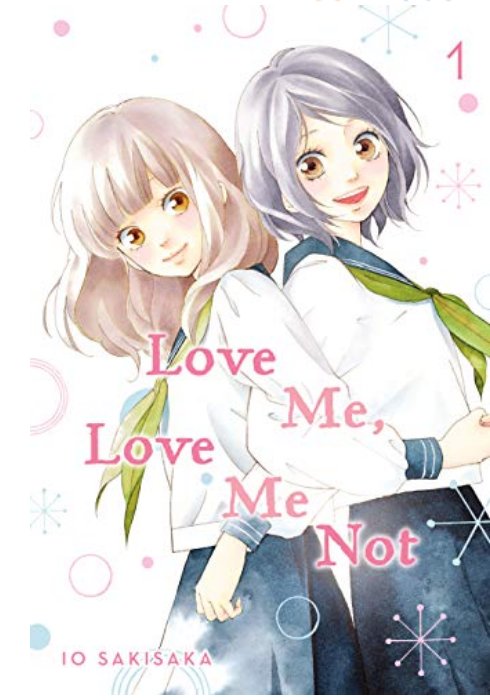
Love Me, Love Me Not, Vol 1

Love Me, Love Me Not, Volume 1 by Io Sakisaka

Strobe Edge was good, and Ao Haru Ride is a special series, so I was very excited when I saw that another Io Sakisaka series was going to be put out under the Shojo Beat imprint. Sakisaka changes things up a little bit by focusing just as much on female friendship as romance. Yuna is a girl who loves reading shoujo manga. She’s a bit shy and not very confident, but she’s quietly very nice. She meets the more outspoken Akari when she asks Yuna for train fare. Yuna also encounters a mysterious, but somewhat crass boy who resembles her long-dreamed of storybook prince. Akari and Yuna bond when they realize that they are both living in the same apartment building and attending the same high school. Yuna shares her romantic dreams, and Akari counters with her much more pragmatic approach of going out and meeting people instead of quietly waiting for a destined love to show up. Akari is surprised when Kazuomi drops by – he’s Yuna’s childhood friend and Yuna’s shyness disappears when she talks to him because she thinks of him like a brother.
Love Me Love Me Not

The characters are all introduced in a series of slice of live scenes that feel very naturalistic. They run into each other on the sidewalk, in convenience stores, walking to and from school, and visiting outside their part-time jobs. As Yuna gets to know Akari better she discovers that her fabled prince is named Rio, and he’s actually Akari’s brother! Akari is concerned about what would happen if Yuna gives in to her crush, because Rio is a bit of a player and is constantly turning down confessions of love from girls. Akari concludes that Yuna should get together with Kazuomi, but she also finds his forthright ways attractive. There’s a not super surprising twist at the end that sends Love Me, Love Me Not firmly into Marmalade Boy territory. This first volume does a great job setting up four sympathetic characters who are all equally engaging despite having very different personalities. Yuna might spend a great deal of time averting her eyes and blushing, but she is willing to push herself to stand up for Akari when some false rumors start going around. Akari is outspoken and always strategizing about what to do when it comes to her friends, but not always great at sharing her own feelings. While Rio is treated in a certain way due to his looks, it is easy to see from his body language and facial expressions, that he’s also burdened by girls developing crushes on him without even taking the time to talk to him. Kazuomi has an open personality, combined with the ability to occasionally come out with pronouncements about life and relationships that make him seem irresistibly cool.

Sakisaka does a great job setting up a new series in the first volume of Love Me, Love Me Not. I like the idea of a shoujo series that will focus just as much on female friendship as it does on romance, and will be eagerly waiting to see how this tangled web of potential teen romance develops in future volumes.
Categories
Manga Reviews REVIEWS

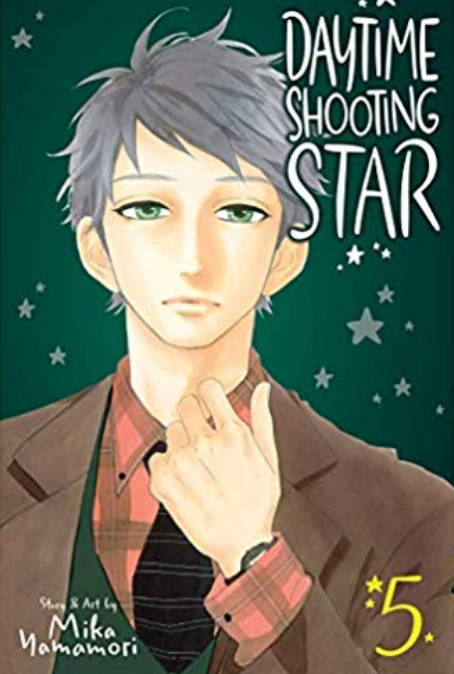
Daytime Shooting Star, Vol 5

Daytime Shooting Star, Volume 5 by Mika Yamamori

As the student/teacher romance in Daytime Shooting Star progresses I find myself thinking, “Oh, that’s cute” and “Stop being so inappropriate Shishio!” very often and simultaneously. Most of this volume is taken up with the old shoujo staple of a school festival. It is the perfect opportunity to shake things up as teens run cafes, put on plays, and engage in high stakes emotions. Mamura in particular is popular as a mostly silent butler at the cafe. Suzume does her best to serve coffee but she’s flustered when Mr. Shishio shows up and sits in her section, accompanied by her uncle. Mamura is in full protective mode, making a comment to Shishio that “A teacher has no business seducing his students” before being distracted by his own family showing up at school. Mr. Shishio confronts Mamura later on, and when Mamura acts cold to Suzume afterwards, she gets annoyed. While all the drama is happening in the cafe, Nekota has to pull herself together to be Juliet after being rejected by Mamura. Her Romeo is the popular and seemingly superficial Togyu, but he’s actually surprisingly insightful.

Suzume is somewhat oblivious to all the drama surrounding her, but she’s feeling awkward about going to see Nekota’s play solo. Shishio shows up in a mascot costume so he can take her to watch the play which is somewhat endearing but also a little creepy. After putting on the brakes for so long, Shishio admits that he has feelings for Suzume, and she’s absolutely stunned. The rest of the volume deals with the aftermath of the emotional revelations from the school festival, as Nekota tries to move on and Suzume decides to work part time in her uncle’s cafe in order to save up to buy Shishio a birthday present. Showing characters navigating through daily life while dealing with plenty of emotions is one of the things that Daytime Shooting Star is good at, along with the consistently stylish art. We aren’t quite halfway through the series yet, but I’m firmly on team Mamura now. Go Mamura! I’m still enjoying this series, mainly because Suzume and Nekota are so oddly sympathetic, but reading it is also balanced out with the tension that comes with reading a romance manga that is going all in on an inappropriate relationship, making me wonder when all the quasi-romance is going to cause some severe negative consequences for all the characters.

Categories
Manga Reviews REVIEWS

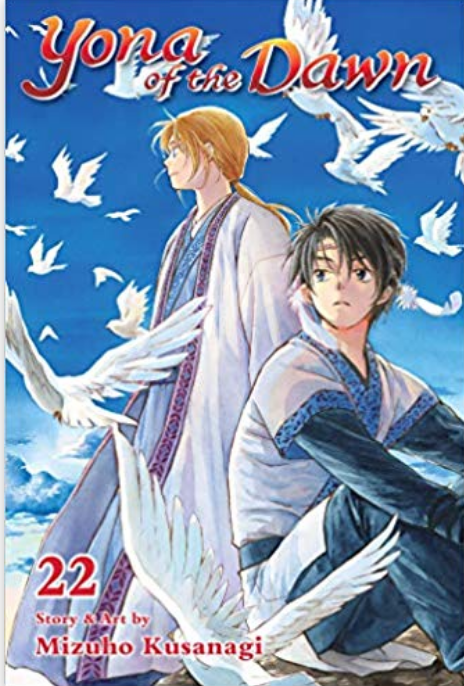
Yona of the Dawn, Vol. 22

Yona of the Dawn Volume 22 by Mizuho Kusanagi

Volume 22 of Yona of the Dawn follows the tried and true formula of contrasting a hilarious chapter with a deep dive into introspection. The volume opens as Riri is recovering from her and Yona’s latest adventure. Su-Won goes to visit her and it is clear that some of the people that surround them are interested in pushing them together for various geopolitical reasons. However, Riri’s a bit dispassionate at being told to act dignified in front of the king, and Su-Won continues to find her frank mannerisms amusing. I hope for better for Riri than Su-Won though! In a hilarious scene Riri reveals the depth of her crush as General Geum-Tae enters her room. She immediately starts blushing and acting like a shy maiden. In the aftermath, plenty of people inform Riri that Geum-Tae is happily marries, and she’s very well aware, she’s just happy to enjoy her crush. Seeing Riri freak out about how cool Geum-Tae is in front of Su-Won was hilarious.

Yona of the Dawn

The reader gets a rare look into Hak’s mind as he struggles with the idea of returning Yona’s misplaced belongings to her, including the hairpin that Su-Won gave her right before he murdered her father. Hak reflects on their past friendship, and Su-Won’s betrayal. He thinks about his own emotions and how Su-Won didn’t seem to care about the pain he was inflicting on other people. The bulk of this volume deals with an adventure to a new land, as people from Xing pop up to ask if Yona and her companions are the “monsters from Kokha.” Yona meets another new female friend when she spends time with Tao, the younger princess of Xing, but she also learns about the extent of political destabilization that is following from Su-Won’s wars, as Xing might be split between two factions. Tao asks Yona’s advice about what to do with Su-Won, and Yona remains awkwardly silent, realizing that bringing her own feelings and opinions into someone else’s political calculations might not be in the best interest of Xing. This volume bridges two story arcs very effectively, with a little bit of comic relief, a glimpse of the emotional toll the journey has taken on Hak, and the introduction of a new land that hopefully Yona will be able to help.

Categories
Manga Reviews REVIEWS

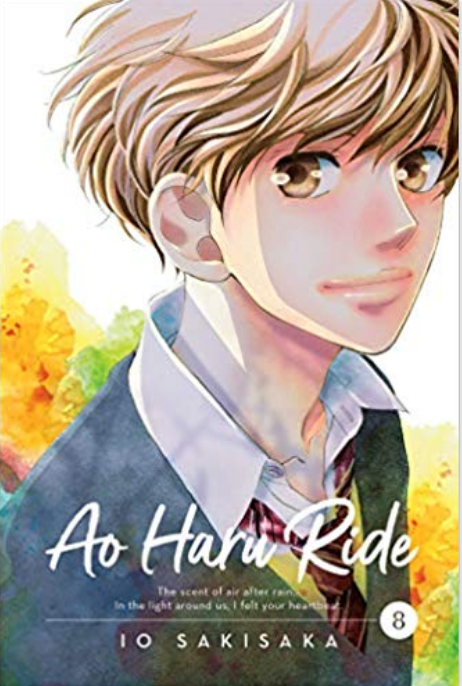
Ao Haru Ride, Vol. 8

Ao Haru Ride, Volume 8 by Ao Sakisaka

Ao Haru Ride continues to provide a unique shoujo story by combining teen romance against a backdrop of grief. Kou continues to think he can fix the world by taking on the responsibility of being sole friend/psychotherapist/boyfriend to his old classmate Yui, but Futuba may finally be ready to move on.

Ao Haru Ride 8

As the volume opens Futuba tells Kou that she likes him, in full expectation that she’s going to be rejected. She wants to get everything out in the open so she can attempt to move on. Kou’s words are carefully chosen, he says “I can’t go out with you” and Futuba smiles and says “That feels like closure.” Her smiling face interrupts a sequence of panels where Kou’s expressionless face is shadowed, pointing to the facade he’s wearing to hide his feelings. Futuba walks away and when Kou’s phone rings (presumably a call from Yui), he smashes it. While Futuba has vowed to move on, she can’t resist trying to make Kou feel a bit of regret, and she decides that she’ll act more feminine and further distance herself from the tomboy persona that she used to assume. She wonders “Is everyone else pretending to be the person they want to be?” Toma seizes his chance and tells Futuba that he likes her just as she is. She isn’t quite sure how to respond, but Toma tells her that he’ll wait and see what she thinks after she gets a chance to know him.

Futuba accidentally runs into Kou at school and he’s back to his usual harsh comments telling her that her attempts to be more feminine totally don’t work for her. Futuba’s introspection makes her both relatable and endearing, as she comments to her friends, “Spending time thinking about a boy who didn’t pick me…is a waste of my youth!” Kou and Futuba are generally so much better together than they are apart, and the attempts to put distance between them simply don’t work. This is a solid middle volume in this series, and there’s a nice one-shot included as a bonus. It’ll be interesting to see what happens when Kou decides that he’s no longer responsible for fixing the universe.

Categories
Manga Reviews REVIEWS

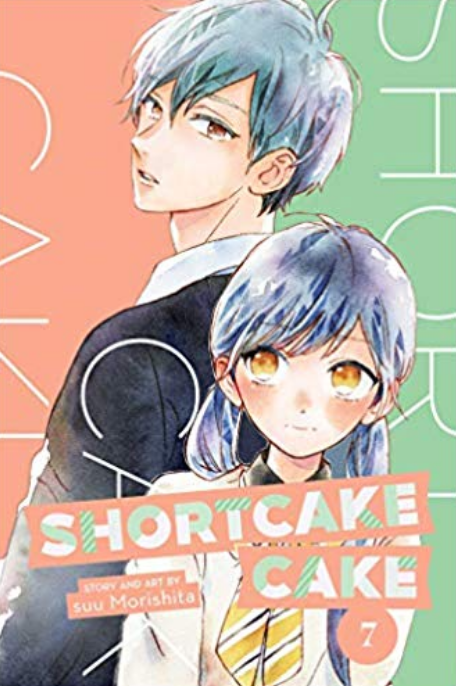
Shortcake Cake, Vol 7

Shortcake Cake Volume 7 by suu Morishita

As I was picking up this volume of Shortcake Cake, I started thinking about how genuinely fond of many of the current Shojo Beat titles. It is quite an accomplishment to develop a line of manga that inspires the feeling that you are seeing a friend again when you get a new volume of a series in your hands, but so many of the current Shojo Beat lineup invoke that feeling for me. Shortcake Cake continues to explore the classic romantic tradition of a love triangle (or possibly quadrangle) as Ten now realizes that she has feelings for Riku after she originally rejected him. In a great scene that takes full advantage of the iconic setting of stairs leading up to a shrine, Riku asks Ten if she likes him, and after a few beats of silence and slightly shifting facial expressions, Ten breaks the tension by balling up her fists and punching herself on either side of her face. Riku grabs her wrists to ask what she’s doing, and she blurts out “I like you.” Morishita’s cinematic approach to paneling switches from character to character, incorporating silent reaction shots coupled with blushes and awkward glances that makes this love confession iconic.

shortcake cake 7

One of the things I like about this series is the way it switches easily between emotional scenes and more comedic aspects of teenage life. Ten continues her confession by saying that she hopes she can make Riku like her back, and asks him to give her some time to win his affection. He says he’ll wait, and Ten thinks that she needs to make up for how she made Riku feel in the past. Ten decides that she’s going to actually attempt to be feminine, and what follows is a crash course in skin care and makeup application from Ageha. Ten also attempts to mirror Riku’s body language to deepen their connection in a hilarious scene. While Ten flits around trying out random advice from friends, Riku seems fairly patient and low key, except when he has to deal with an attempt to clear the air from Chiaki. In settings that recall the places where they’ve spoken in the past, Ten and Riku are open with their feelings and embark on an actual relationship.

With the way this series is developing, I’m not expecting the love confessions in this volume to be the last ones, which is a good thing because Morishita executes them so well. It is pretty adorable seeing Ten and Riku together and on the same page, but I’m very curious to see what happens when Rei figures out what is going on. Rei is largely absent from this volume, except for a single vignette after the main story, so I’m expecting him to show up soon. Shortcake Cake presents teen romance with a depth and emotional resonance that sets it apart from many other series. I’m still unsure who Ten is going to end up with, and that continues to keep me intrigued as a reader.