Categories
Manga Reviews REVIEWS

Virgin Slave, Barbarian King and Raintree: Haunted

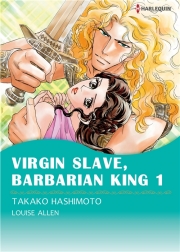
Virgin Slave, Barbarian King Vol 1 by Louise Allen and Takako Hashimoto
Available on emanga.com

vsbk1

This manga will appeal to historical romance fans, and people who enjoy a bit of sweeping adventure in their romance manga. Julia is a noble Roman woman who is quite horrified when her city is overrun by barbarians. She is even more horrified when a barbarian chieftain named Wulfric decides to carry her off in order to force her to serve as a slave. Wulfric’s long blond hair makes him look like a slightly more bloodthirsty version of Dorian from Eroica with Love, which I found amusing. Julia sees that Wulfric is far more humane in his treatment of Roman slaves as he’s sacking her city than their Roman masters were. She begins to start questioning her way of life and the way she unthinkingly took advantage of other people’s servitude. Julia is far too self-assured to meekly start serving anybody, and while she does start to fit in with the Visigoths, she also manages to fight back against Wulfric in some amusing ways. The art in this volume is much more detailed and assured than I usually expect to see in Harlequin Manga adaptations. As the story progresses, Julia begins to learn more of the pressures the barbarians face, as well as the political struggles that Wulfric has to deal with. My main quibble is that the ending felt a bit truncated, and I’m assuming that is because the adaptation of the story was actually split into two volumes. Still, this would be a fun manga for historical romance fans. I was reminded of Red River a bit, although this story didn’t have the complexity of story found in that manga. I’m happy that emanga.com is releasing some historical romance adaptations!


Raintree: Haunted Vol 1 by Kazuko Fujita and Linda Winstead Jones

Available on emanga.com

This manga is adapted from a series of Silhouette Nocturne Harlequin books, so I was expecting a contemporary paranormal romance and that’s exactly what I got. Gideon Raintree is a detective from a family with varied psychic powers. He can conveniently speak to ghosts, but he has issues emitting random bursts of electricity and thus will never know the joys of owning a smartphone. He is also occasionally visited by a ghost who claims to be the spirit of his future unborn daughter. Even Gideon finds this a bit disconcerting. Gideon gets assigned a tough yet beautiful new partner named Hope, who finds his numerous eccentricities suspicious even while she admits to herself that he is distressingly attractive. Gideon and Hope work to track down a female murderer who may have a connection to the occult, and along the way Gideon finds himself revealing more and more about his odd powers to his new partner. Kazuko Fujita has adapted a ton of Harlequin manga, and it shows in her attractive character designs and capable art. This is another Harlequin manga with much better than average art, and I enjoyed the way Fujita made the murderess look much more haggard and desperate than the other characters. Sometimes in manga-land everybody is portrayed as equally attractive, with just slightly different hairstyles, so I appreciated the extra attention to detail here. The story continues in the second volume of this manga, but the first volume also had a fairly satisfying conclusion. Also recommended!
Categories
Manga Reviews REVIEWS

Harlequin Manga: Ordinary Girl in a Tiara and The Greek Tycoon’s Defiant Bride

I was excited when emanga.com announced that they were releasing a bunch of new Harlequin manga on their platform! I’m going to pretend that emanga wanted to give me an awesome holiday present, because I am always up for reading some Harlequin manga.

tiara

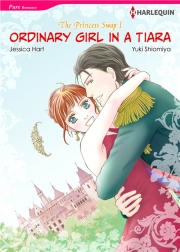
Ordinary Girl in a Tiara by Jessica Hart and Yuki Shiomiya

available on emanga.com

Harlequin stories are plenty formulaic, so much so that pulling off a Harlequin romance that is both familiar and enjoyable can be somewhat tricky. Part of the fun for me when reading Harlequin manga is encountering plot elements that I’ve seen before, but executed in an interesting way. This is one of my favorite recent Harlequin manga reads. Ordinary Girl in a Tiara is, as one would surmise, about an ordinary girl who ends up accidentally taking up with royalty. Caro has an intense love of vintage fashion and an interesting past where she went to school with the elite of Europe on scholarship. Caro’s best friend Charlotte is a princess of a tiny European country who calls upon Caro to provide a diversion by dating her distant cousin and rumored fiance Prince Phillipe.

Phillipe shows up at Caro’s door to ask her to be his fake girlfriend, and he is suitably horrified by Caro’s devotion to horrible crochet vests from the 1970s. Clearly he is a man of great taste and refinement. Caro agrees to go along with the charade of dating him, and goes back to his tiny European country only to get caught up in court politics. Phillipe is struggling to establish himself as the future ruler, and the fake couple gradually become a real couple as they begin to spend more and more time together. All too often in Harlequin stories, the hero acts like a big jerk, but while Phillipe does have is standoffish moments he and Caro are a very sympathetic couple. There are elements of humor in Caro’s unending parade of vintage fashion choices, and while the art isn’t terribly detailed, it doesn’t suffer from the lack of fluidity and expression that sometimes plagues Harlequin adaptations. Highly recommended!

greektycoon

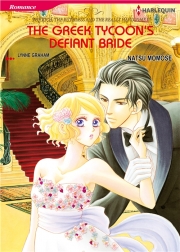
The Greek Tycoon’s Defiant Bride by Lynne Graham and Natsu Momose

available on emanga.com

Whenever I read Harlequin manga, I tend to go for the volumes that have the longest and most ridiculous titles involving Defiant Brides, Virgin Stable Girls, or Secret Agent Secretaries (I just found out that there is a romance with the title Secret Agent Secretary, I think I’m going to have to read it). This manga was exactly what you would expect from the title, as it does indeed feature a Defiant Bride of a Greek Tycoon!

Maribel is an ordinary girl (aren’t they always!) who is desperately in love with her deceased cousin Imogen’s ex-boyfriend Leonidas. Maribel sees Leonidas at a memorial service after running away from him years before, but she returns to her life as a single mother, confident that romance will not find her again (OR WILL IT!?). Leonidas shows up at Maribel’s house and is immediately suspicious when he discovers that she has a toddler with the name of his grandfather. The narrative structure of this manga was interesting, because it kept switching between the flashbacks where Maribel and Leonidas are just getting to know each other, and the present day where Maribel is desperately trying to get away from him in order to live an ordinary life. The relationship unfolds in both the present and the past, leading to a time when Maribel will perhaps not be quite so defiant about being in a relationship with Leonidas. I enjoyed the art in this volume. The paneling was a bit more varied and interesting than I tend to expect from a Harlequin manga, and Momose frequently cuts in detailed close-ups of the characters when they are in the grips of a dramatic emotion.

Categories
Manga Reviews REVIEWS

Happy Marriage Vol. 3 and Demon Love Spell Vol. 5

Happy Marriage Volume 3

I continue to enjoy Maki Enjoji’s series about an office lady who abruptly finds herself married to a seemingly cold and domineering company president. Chiwa and Hokuto have gradually grown closer over the first two volumes of this series, and the relationship continues to develop further in the third volume. Chiwa finally deals with Hokuto when he’s in a vulnerable position when he suddenly becomes ill, and she has to tend to him at home. One thing I enjoy is the way Enjoji slips into showing action without words or thought balloons in order to show events with more emotional impact. When Hokuto wakes up in the middle of the night and sees Chiwa sleeping by the side of his bed, he looks absolutely shocked, then silently pulls her over so she can sleep more comfortably beside him. There are still some slice of life humorous moments in the manga, like when Chiwa deals with Hokuto’s hidden slovenly habits at home and her tendency to become an “Octopus Woman” when she sleeps.

The big emotional breakthrough in the volume occurs when Chiwa and Hokuto have to go visit his family, and Chiwa sees how poorly he’s treated by his relatives. This explains a great deal about his personality and motivations, and Chiwa gets so angry she is more emotionally honest about her feelings for her husband as she’s sticking up for him than she’s ever been when talking to Hokuto directly. I’m looking forward to what happens next! It is a bit odd to root for a married couple to get together, but Enjoji manages to pull this situation off with an engaging story and sympathetic characters.

Demon Love Spell Volume 5

This volume will be particularly fun for any fans of Mayu Shinjo’s series Sensual Phrase. Demon Love Spell can be depended upon to serve up plenty of humor and paranormal romance hijinks, and this volume picks things up with a funny plot device. Incubus Kagura and priestess Miko decide that they’re going to move out of Miko’s family home/shrine and her father promptly agrees! But before they go Miko’s father uses his priestly powers and puts a curse on Kagura so that he will be utterly incapable of romancing Miko in any capacity. The young teenager and incredibly old incubus struggle with finding an apartment. Miko starts working a part-time job to support them. They barely ever see each other, and it seems like their new apartment may also be haunted!

In any romance manga, misunderstandings get in the way of true love, and when Kagura decides to go into showbiz in order to make some money to support Miko, she promptly becomes jealous and concerned that he’s getting “powered up” from other women. Kagura’s demonic hotness ensures overnight success as a male model, and he soon becomes a pop sensation as well. Much is made of Kagura’s resemblance to the hero Sakuya from Sensual Phrase, and I found it hilarious that Shinjo’s habit of drawing her male heroes in a very similar fashion was acknowledged in this manner. All in all, this was another fun volume of this series. I’m definitely enjoying Demon Love Spell much more than Ai Ore, and I hope that more of Shinjo’s series get translated over here.

Categories
Manga Reviews REVIEWS

Vinland Saga Vol 1

Vinland Saga, Vol 1 by Makoto Yukimura

This is a manga that I think of as having mirage-like qualities. I never thought it would actually be released in the US, just because I assumed a 13+ volume series about vikings would be a bit of a hard sell, despite the almost universal acclaim that Planetes Yukimura’s other English-translated series received. Furthermore the fact that the first volume of this series vanished from amazon (it is still available in kindle format) made it seem all the more hard to get. Fortunately I was able to brave the wilderness of an actual brick and mortar bookstore (isn’t it good these are still around) and track down this volume.

Releasing series that might be slightly less commercial in an omnibus deluxe format seems like a smart move. This hardcover volume features color pages, author notes, and a bonus story, so the higher price point still feels like a bargain. Vinland Saga certainly lives up to its title, as the first two volumes set up a sweeping tale of adventure, simmering revenge, daring battles, amusing cynicism, and manly men being almost too awesomely manly. The story opens mid-battle, as the Viking commander Askeladd observes a battle between Frankish tribes and is determined to enter the battle as a third party and make off with all the spoils of war. Askeladd sends out a pathologically surly young boy to be his messenger, but Thorfinn demands a reward before agreeing to undertake his task. Askeladd knows what Thorfinn wants and promises him his reward if he brings back the head of the commander of the opposing forces.

Bringing back someone’s head might seem like a bit too much of a burden for a young man, but Thorfinn capably negotiates with the frog-like Frankish leader, climbs the walls of the besieged castle, beheads his target, loses the head, retrieves it, then heads back to his companions to demand his reward – a duel with Askeladd. Thorfinn has been raised by Vikings who killed his father, and as he’s grown older and more capable his desire for revenge has increased as well. The battle scenes in Vinland Saga are dynamic and detailed, and it is hard not to root for Askeladd due to his innovative battle tactics and glee in his victories. If this manga only focused on battles, I could see it becoming less interesting, but Yukimura spends just as much time showing the reader the family life of the men who go out to plunder and raid.

An extended flashback throws Thorfinn’s current life in sharp contrast, as the reader sees the peaceful village where he was raised, and the father who he wishes to avenge. While Thorfinn’s family was removed from violence in the past, his father’s legendary martial prowess results in old enemies seeking him out, and Thorfinn’s innocent desire for adventure ends up leading him to experience loss at a very young age. Yukimura’s realistic and detailed style grounds the story effectively, with all of the background elements such as dwellings, ships, and clothing having the well-researched feeling that just allows a reader to slip into enjoying the story easily. While there’s plenty of adventure and action in Vinland Saga what stands out to me more are the human elements that Yukimura focuses on so well. Seeing the world weary desire for peace shown by Thorfinn’s father does more to ground the character than showing all of his past battles. Leif Erikson shows up as a storyteller who enjoys talking about himself far too much. Thorfinn’s sister is hilariously indifferent to the attentions of the village boys, and Thorfinn’s gentle mother is shown with murder in her eyes when she sees her husband not paying enough attention to her newborn daughter. I’m very much looking forward to the next volume of this series.

Categories
Manga Reviews REVIEWS

Josei from Vertical, Helter Skelter: Fashion Unfriendly and Utsubora: The Story of a Novelist


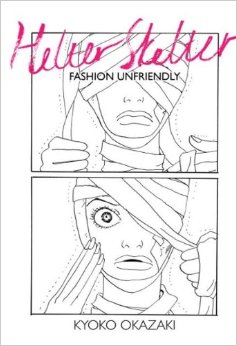
Helter Skelter: Fashion Unfriendly by Kyoko Okazaki

It has been a very good year for fans of josei. Viz appears to be committed to disguising a few josei titles like Happy Marriage and Midnight Secretary as mature shoujo. I’m enjoying those very much, but I’m also very happy that Vertical is releasing josei as well, with the kind of more raw and uncompromising titles that you’d expect from them.

Helter Skelter: Fashion Unfriendly
is a slap in the face for fans of titles like Paradise Kiss or Walkin Butterfly. While neither of those titles presented a totally romantic view of the fashion industry, Helter Skelter’s story of a dysfunctional model is packed with both rage and almost unrelenting ugliness. Liiko is a supermodel at the top of her game due to massive plastic surgery. She’s incredibly self-obsessed and driven to achieve even more by her surrogate mother/manager. Liiko’s beauty and charisma serves as a snare that draws the people around her into her incredibly warped world, resulting in some incredibly warped plot twists that all make sense. Hada, Liiko’s young manager finds her own personality changing as she becomes more and more subservient to her mercurial boss.

Liiko’s surgeries are starting to break down, and there’s an unsettling theme of body horror that is prevalent throughout the title, as Liiko’s facade literally begins to crack, and she becomes more and more desperate to preserve her beauty. She’s a charismatic monster, but as the story progresses and her condition worsens it is almost possible for the reader to start viewing a broken down supermodel as the embodiment of raging id, albeit an id with a really good shoe collection. Okazaki’s art is deliberately rough and skewed, showing the fashion world as anything but glamorous. Liiko has a few panels of looking polished and perfect when she’s modeling, but mostly all the characters are portrayed in a sketchbook type style, with exaggerated features and the occasional rictus-like expression that serves to underscore just how false fashion industry concerns are.

Utsubora: The Story of a Novelist by Asumiko Nakamura

This manga is an interesting mix of genres. There are elements of noir, thriller, psychodrama, and a meditation on the meaning of identity in this story about a novelist who gets caught up in plagiarism and a young woman who turns herself into a character from one of his stories. The manga opens with the body of a young girl falling from the top of a building. Shun Mizorogi, a famous author who affects traditional Japanese clothing is called to the hospital to identify the body of the girl Aki. Sitting in the hallway of the hospital is a girl who is apparently Aki’s twin. Nakamura weaves together an intriguing mystery with Mizorogi and the supporting cast, which includes his painfully naive niece, the detectives investigating Aki’s death, and Tsuji the editor who is suspicious about Mizorogi’s sudden late in life outpouring of productivity. Mizorogi tries to unravel the mystery behind the sudden appearance of Sakura Miki, and all of the mysteries surrounding the death of Aki are about to converge in a very interesting way.

Nakamura’s style is both delicate and detailed, with some panels reminding me a little bit of art nouveau. This sophisticated illustration style makes the psychosexual developments in the book even more unsettling. Utsubora has some amazingly unsympathetic characters, but it reminded me very much of classic noir works where the dark side of human nature is fully explored.

Both Helter Skelter and Utsubora are omnibus editions, and as always the production from Vertical is a treat. Both manga have the type of memorable stories and characters that will linger in the minds of readers long after they’ve finished reading. For challenging josei manga with plenty of psychological twists, you can’t go wrong with picking up both of these titles.