Categories
Manga Reviews

One Piece Volumes 1 and 2

One thing that I’ve found a little off-putting about One Piece is the wide consensus that it takes quite a few volumes to really get going. I tend to follow a two book rule on principle when evaluating manga series to see if I want to collect them, because while I’ve read plenty of so-so first volumes that develop into an interesting series by volume two, I have a limited amount of patience when it comes to the idea of collecting several volumes just to get to the good stuff. But I only have the first two volumes on hand right now, so that’s what I’m going to look at today. I’m going to attempt to show what might lead a reader to assume that the series isn’t so great and also highlight the aspects that might cause someone to come back for more.

The first chapter of One Piece follows a very typical shonen formula. An adventurous proto-hero gets inspired by a total bad-ass and decides to become a hero himself. I’m sure there are numerous examples of other manga that have similar beginning chapters, but the ones that come to my mind immediately are Tegami Bachi and Gun Blaze West. The heroic quest idea gets a little bit of a twist in One Piece because Monkey D. Luffy decides that he’ll become “The King of the Pirates.” Luffy is aided in his ambition by his inadvertent ingestion of the fruit of the Gum-Gum tree, which adds him to the ranks of stretchy superheroes. I’ve often thought that elastic powers give a cartoonist the license to go absolutely crazy, but Luffy’s powers mostly seem to manifest in near-invulnerability and the ability to do devastating super-stretchy punches.

Luffy is a hero who is made engaging due to his almost stupid levels of enthusiasm and his tendency to leap into action without any fear for himself. He sets out in a dinghy for the fabled “One Piece,” the legendary pirate treasure that will make him Pirate King. Luffy’s early adventures show him gradually assembling a team that will help him fulfill his quest. He’s joined by Zoro, a swordsman with a hilarious three-sword technique (he fights with swords in both hands and one clenched in his teeth) and Nami, a greedy femme fatale of a navigator.

The art in One Piece is one aspect that might be off-putting to a new reader. Oda’s style is cartoony, with plenty of exaggerated facial expressions. If someone comes to One Piece wanting slick art featuring the giant blades and billowing costumes of Bleach, they’re going to be disappointed. I enjoyed the Oda’s art, just because it looks very different from most shonen titles. I especially appreciated the variety in the character designs for the villains Luffy faced, which ranged from a hideously gigantic pirate queen to a corrupt navy captain with an iron jaw and an axe for a hand. I wasn’t surprised to see that Oda once worked as an assistant on Rurouni Kenshin, because I always thought one of the great things about that series was distinctive villain character design. That’s something I look for when reading shonen manga, so that goes in One Piece’s bonus column for me.

The storyline in the first couple volumes will likely perplex anyone who is wondering why One Piece is a bestseller in Japan. Luffy pulls his team together due to his enthusiasm and genuine friendliness. Even if other characters initially think Luffy is crazy, they end up falling in with his plans despite their earlier intentions. The first couple volumes feature plenty of fights made more interesting by the unique qualities of the villains as well as some episodes that have a bit of after school special type moralizing about the power of friendship. Luffy meets a boy whose ambition is to join the navy and fight pirates, and he becomes Luffy’s first friend from outside his village. Later, a dog’s loyalty is shown to endure past the life of his master in a town decimated by pirates.

The emotional tone in the first couple volumes is one thing that I think hasn’t gelled yet. The series seems on the surface to just be fairly goofy, with the exaggerated villains, plenty of action scenes and jokes, and a hero who can’t be hurt by anything. But there are scattered scenes that emphasize the arbitrary nature of violence and death. Luffy’s hero gets his arm bitten off by a shark and seems largely unconcerned about the sudden amputation. Zoro’s back story is about moving on from tragedy and while Luffy is largely unharmed by fighting with pirates, his companions don’t have that luxury. Zoro fights past the point of exhaustion and announces his intention to sleep on the battlefield, and Luffy cheerfully flexes his muscles and decides to take over. The darker element of violence mixed with the more frivolous elements and usual shonen boosterism of friendship might hint at darker times ahead for Luffy and his crew, and that’s what I’d be interested in seeing later on in the series.

If I was just going by the first couple volumes of the series, I might just assume that One Piece was just a slightly better than average shonen series, with the added bonus of piracy. But seeing how many people are genuinely enthusiastic about this manga makes me think I should at least check out a few of the omnibus volumes even though I am frightened of getting hooked by a 60+ shonen series. I will be looking for One Piece at my local library too.
Categories
Manga Reviews

Viz Signature Quick Takes – 20th Century Boys, Children of the Sea, and Detroit Metal City

20th Century Boys Volume 11

I made a conscious decision that I was going to invest in one Urasawa series, and that would be 20th Century Boys. I read the first three volumes of Monster, and a couple volumes of Pluto but I just feel more invested in finding out what’s going to happen in the sprawling narrative of 20th Century Boys than Urasawa’s other series. With the eleventh volume, we’re at the halfway mark for the series, and there’s plenty of emotional trauma and action as Kanna finds out the truth behind her parentage and the Friends are on the street persecuting any ally of Kanna’s they can find.

Kanna finds out that her father is the Friend, and lapses into a fugue-like state because she’s utterly unable to process that information. Her connection to her beloved uncle Kenji is severed when her old walkman finally stops working and she’s no longer able to listen to his songs. Seeing Kanna brought down so much made me realize again how young she is, even though she’s exhibited cleverness and charisma as she moves towards being the focus of a resistance movement against the friends. Kanna works through the revelation about her father only to find out that her missing mother was a biomedical researcher who might have contributed the disease outbreak that proceeded the Bloody New Year’s Eve. Sadakiyo makes a final decision about what to do with his life, and Kanna meets up with classmate Kyoko and some of Kenji’s other allies. A special bonus in this volume was the reappearance of Otcho, who is one of my favorite characters. I can see the different threads of Urasawa’s story start to come together, and I’m happy to be on board for the next ten volumes.

Children of the Sea Volume 4

I read the first volume of Children of the Sea and caught a few chapters online, but I’ve missed a some chapters. Fortunately so much of this series is expressed in the beautiful art, it was easy just to crack open the book and let the atmosphere created by the philosophical characters and gorgeous illustrations wash over me.

Ruka has vanished with Umi and quirky scientist Anglade. Her parents and Jim are left alone to unravel the mystery behind her disappearance. While sending out search parties is ineffective, Ruka’s mother who used to be a traditional shell diver sets out to find her daughter along with the wisewoman Dehdeh. Kanoko works through her own relationship with the sea as being on the ocean to find her daughter makes her recall her childhood. Other flashbacks feature the strained relationship between Anglade and Jim, with plenty of scientific theorizing from Anglade as he touches on issues of evolution, astronomy, and the nature of time and space. Ruka and Sora explore a strange underwater world in the presence of a mystical meteorite. I had no idea what was going on with Ruka and Sora, but the images of them encountering bizarre sea creatures were arresting. Igarashi creates this manga with such a unique atmosphere and reading experience. I wouldn’t have thought that the mysteries of the sea combined with child explorers and a healthy dose of scientific theorizing would be so compelling, but Children of the Sea pulls it off admirably.

Detroit Metal City #7

Detroit Metal City is a manga that I’m happy to read if I stumble across a copy, but I probably wouldn’t make a special effort to seek it out. I did think in my review of the previous volume that the hints of an ongoing storyline might combat the repetitive nature of the main joke behind this manga about the meek Soichi who is helpless in the face of his uncanny talent for being a profane front man for a death metal band.

Unfortunately I found that the story carried over from the last volume dragged a little bit. Soichi has found a substitute Krauser II to take his place, but a challenger named Krauser I may destroy DMC. Despite a truly odd sequence of Krauser I raping Tokyo Tower, there wasn’t a whole lot of interest in the Krauser confrontation, as it seems that every contest ends with establishing that Soichi can yell “rape” faster than any human on the planet. I did enjoy Soichi’s ill-fated attempt to connect with his desire to create pop music by entering an artists’ colony. Despite the fact that Wakasugi isn’t the most gifted cartoonist around, seeing the blandly happy faces of the art students and reading Soichi’s lame pronouncements like “the curry might get cold, but never our passion” was hilarious. The volume finished up with a few short chapters about a bad hair day for Soichi and the lengths he will go to in order to prevent his younger brother from losing his virginity. So overall, DMC 7 was a bit of a mixed bag – there were a few very funny moments mixed in with some episodes that were a bit long.

Review copies for Children of the Sea and Detroit Metal City provided by the publisher.

Categories
Manga Reviews

2010 Manga Gift Guide

Here are my picks for manga to give to people this holiday season! Here’s my guide from last year, in case you’re curious about my previous picks.

We’re lucky to be living in an age of awesome omnibus editions, and I think they make awesome gifts for manga fans. The books on this list are suitable for teens and adults, I didn’t read a ton of all ages manga this year.

For the fan of classic shoujo:

I don’t think it gets much better than the Dark Horse Clamp Omnibus releases. Some of the more recent Clamp series leave me a little cold, but it is hard to recapture the charm and whimsy of the original Cardcaptor Sakura. With plenty of outfit changes, a tarot card-inspired magical quest, and puppy-love crushes popping up everywhere, Cardcaptor Sakura is a must read for any fan of shoujo fantasy. I tend to be merciless about culling my collection if I have older volumes when I know I’m going to buy the same manga in a deluxe edition, so I don’t have my old stray volumes of the original Tokyopop release. I can’t compare the old and new translations, but I do appreciate the great paper quality of the new Dark Horse edition, as well as all the bonus color illustrations included in this volume. I’m looking forward to collecting the rest of this series.

Itazura na Kiss came out last November, but I didn’t read it until 2010 so I’m including it in this gift guide. The dim-witted heroine with lots of heart is a shoujo staple, and sometimes such a cliched character type can be a little annoying. However, one of the reasons why so many lazy mangaka turn to this character type is the classic and hilarious portrayal of Kotoko in Itazura Na Kiss. Kotoko’s hopeless and all-consuming love for the epitome of Japanese eliteness Irie inspires sympathy in me as opposed to resignation. Kaoru Tada surrounds her odd couple with a large and hilarious supporting cast, making Itazura Na Kiss much more interesting than you might think for a story that follows the romance of a nice but simple girl and her chosen snobbish but intelligent guy.

For the shoujo fan who has everything:

One of my pleasant discoveries late in the year was the omnibus edition of Toru Fujieda’s Dragon Girl. I enjoyed her series Oyayubihime Infinity from CMX, and Dragon Girl makes a slightly goofy premise (girl infiltrates a traditional Japanese cheering club) much more enjoyable than you might think. Rinna’s relentless pursuit of excellence in cheering and total lack of embarrassment even as some of her classmates attempt to pick on her are admirable, and Fujieda manages to create an interesting reverse harem story with plenty of humor. I’m looking forward to the second and concluding volume when it comes out later in the year, and I think the double omnibus edition will make a great addition to any fan of silly shoujo. I haven’t seen this title get as widely reviewed as other shoujo titles recently, so this is my under the radar new shoujo pick.

For the alternative comic fan:

If you know someone who tends to prefer alternative or indie comics, there are some manga out there that should appeal to them. Tops on the list is the Top Shelf anthology AX Volume 1. My full review is here, but the short version is that AX is a carefully curated anthology that gives the reader a new appreciation of the variety of storytelling and art styles that come out of the alternative comics scene in Japan. This would also be a great gift for the manga fan that appreciates volumes that fill in their knowledge of the history and development of the art form.

Other options would be almost anything from Viz’s Sigikki line which is filled with unique storytelling and distinctive art styles. My current favorites from this line are Children of the Sea, Afterschool Charisma, and House of Five Leaves. I think House of Five Leaves, with its slice of life account of a diffident ronin accidentally falling into a life of crime might appeal most to indie comic fans who are open to trying out some manga.

Fans of craziness in comic form – post apocalyptic sci-fi seinen version:

I’ve only read one volume of Biomega and I mean to track down the rest of the series at some point. However just from reading the first volume I wouldn’t hesitate recommending the title to anyone with a sense of humor who enjoys dark twisted science fiction. Tsutomu Nihei’s vision of the future is filled with stylish zombie fighters, abandoned places with interesting architecture, and a talking bear with a machine gun. I don’t think it gets much better than that. I can’t say that Biomega was terribly coherent, but the gorgeous art, creepy zombies, and the aforementioned talking bear with the machine gun goes a long way in satisfying me as a reader. Also: talking bear with machine gun.

Fans of craziness in comic form – cracktastic fantasy shoujo eye-candy version:

This was a really good year for shoujo. But the new series that immediately captured my attention was Demon Sacred, Natsumi Itsuki’s manga about mystical creatures from another dimension that manifest as unicorns and dragons, then take the form of super-hot idol singers when bonded to teenage girls. Add in the medical mystery surrounding the reverse-aging disease called Return Syndrome, a hot genius scientiic researcher, and angsty twin girls and you get one of the most genuinely crazy shoujo plots that I’ve seen since Moon Child. Priced at $5.99, it would be easy to pick up the first couple volumes for any fan of loopy shoujo series. While the first volume of Demon Sacred was a little dense, by the second volume I had given myself over to the craziness and I am eagerly looking forward to the third volume which is coming out at the end of the month, because I need another hit. Nope, this series isn’t addicting at all!

Shonen manga of the year:

I didn’t expect that I’d love Cross Game so much, but this slice-of-life story about a young baseball prodigy touches on issues kids face as they grow up with the baseball serving only as a backdrop. As the characters age and move up in school, they face challenges that go beyond just the baseball field. Ko is an engaging hero, and I’m genuinely curious to find out how he and his friends deal with the corrupt baseball coach at their high school. The three volume omnibus helps compensate for the slightly slow start to the series, but I appreciated being able to read a sports manga that showed time gradually passing for the characters.

Box Sets

Box sets might not be useful for established manga fans, but for newer fans who might not have collected the volumes yet, they could be a great way to get someone hooked.

Death Note Box Set (Vol. 1-13)

Vampire Knight Box Set

Fruits Basket, Vols. 1-4

As for what’s on my wish list, I’d probably want to fill in the gaps in some of the Viz signature series where I don’t have all the volumes, like getting the rest of Biomega, snagging volumes 2 and 3 of Children of the Sea, and the second volume of House of Five Leaves.

Happy Manga Shopping!

Categories
Manga Reviews

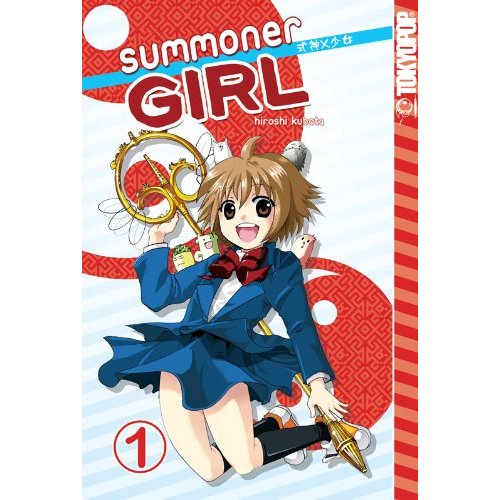
Summoner Girl Volume 1

Summoner Girl Volume 1

I think with this series, I have contracted a severe case of yokai fatigue. This manga probably won’t interest older readers who are already very familiar with monster hunting storylines from other manga, but I think it would be a fun read for younger readers. Hibiki is a summoner, given the ability to call on spirits that embody the five elements. She’s set on a quest to gather mystical jewels in order to fulfill her destiny to become High Summoner. Hibiki’s sent on quests by her overly enthusiastic grandmother who urges her to ditch school if there’s a spirit nearby that needs hunting. Hibiki is aided by a slightly dim-witted boy named Kenta who possesses some spiritual powers of his own. One aspect of the manga that I thought was interesting was the way Hibiki takes on the personalities of the spirits she summons to help her, for example becoming angry and belligerent when she summons the aspect of fire. Even though Hibiki hunts spirits, her general approach is to try to understand them instead of pounding them into submission with her considerable mystical powers. Hibiki’s spirit aides take the form of cute animals that rest on her shoulders, offering a running commentary on the action

Kubota’s art has a mobile, thin line which blends in cute drawings of Hibiki with elements of the grotesque like a yelling wrinkled grandmother, a house filled with cobwebs, and a snarling fox spirit. The plot was exactly what I’d expect from a yokai manga, without anything extra to draw me in to want to read much more of it. While Summoner Girl didn’t fully capture my attention, I think the combination of Hibiki’s good-willed approach to spirit hunting, demon fighting, and jokey sidekicks would appeal to younger readers. I wouldn’t hesitate to recommend this volume to a young teen wanting a new action series featuring an engaging heroine.

Review copy provided by the publisher

Categories
Manga Reviews

Shonen Quick Takes – Hikaru no Go 21 and Arata the Legend 4

Hikaru No Go Volume 21

It has been some time since I’ve read Hikaru No Go. I started getting it when it came out and collected up to volume 11 or so, and stopped automatically buying it because I thought at some point I’d go back and fill in the missing volumes. Even though there was a big gap for me, it wasn’t hard at all to pick up this volume and get back into the story.

Hikaru has gone pro, and much of the volume centers around his preparation for his first big international tournament. Many people have a stake in showcasing young players at the tournament. The Go associations and media think there will be more general interest if younger players are included. Hikaru and Toya play well enough in the preliminaries to be selected for the tournament, along with Yashiro and Kurata. Even though I know almost nothing about Go, Obata’s art still makes all the matches and rivalries between the players look dynamic. Hotta’s story juggles several themes and sub-plots, so even though the main storyline might be about gearing up to compete in a tournament, there’s so much other stuff going on that the plot doesn’t seem stale. Akira’s father is competing overseas even though he’s retired. He’s still on a quest to find the divine move, and the way Akira looks at his father shows some frustration that I think is going to be explored in a later volume. A Korean player is talking smack about Hikaru’s former mentor Sai, setting up a cross country rivalry. Hikaru and his teammates sequester themselves for training, and Hikaru is still falling short when playing games against Akira. I’m looking forward to seeing how the young players handle the stress of a professional tournament. Checking in on this series again reminded me of how good it is, I need to stop being such a slacker and seek out some of the volumes that I’ve missed.

Arata: The Legend Volume 4

For the first half of this volume, I felt a little frustrated. I do generally like Yuu Watase, even if some of her series are often a bit formulaic. I like Fushigi Yugi, Fushigi Yugi Genbu Kaiden, Ceres, and Alice 19th a lot. Imadoki is simple, but very sweet. I do not speak of Zettai Kareshi. The first part of this volume was frustrting. I wasn’t sure how many times Arata was going to stumble across Kotoha when she was changing. The romance aspect of this manga is really uninteresting, I don’t particularly care about Arata being tortured with guilt because Kotoha has confessed her love to him, yet he knows she’s really in love with Other Arata who is taking his place in modern day Japan. The quest element of the story is the type of plot that Watase does often, sometimes well, and sometimes not so well. Arata’s emphasis on winning through peaceful means is a little bit of a twist on the more typical shonen fighting hero.

What made me want to keep giving the series another chance were a couple things that happened a bit further into the book. There was finally a long sequence showing Other Arata trying his best to live Arata’s life in Japan. It was interesting to see how he was able to deal with school bullies and the issue of having parents when he hasn’t had a family before. The other sequence in the book that I thought had a lot more emotional resonance was when Arata and his allies accidentally stumble in to an odd orphanage filled with plucky children who immediately start relating to them as parents. Somewhere there’s a mystical barrier, but the “adults’ in charge of the orphanage are anything but human. Arata and Kotoha befriend twins named Naru and Nagu, and the revelation about who has been creating the orphanage with magic and the resolution of the episode had much more emotional impact than a lot of the previous events in Arata. So while this is not likely to be one of my favorite Watase series, there were enough good elements in this volume to make me hope that the series might continue to get better.

Review copies provided by the publisher.